What flows today
holds tomorrow.
PS Resins develops and manufactures reactive resin systems that combine academic research with industrial production know-how. Sewer rehabilitation is our established field of application.
Sewer rehabilitation, area by area.
Each area of sewer rehabilitation uses specific resins. Here is which.
House connections
Tazacryl and Tazipox resins; Tazacryl 50, 70 and 100 developed specifically for house connections.
In-building rehabilitation
Tazipox resins and Tazacryl HP for pipes inside buildings, without breaking open walls or floors.
Short liners
Silicate resins for impregnating short liners in point repairs.
CIP systems
Highly resistant acrylate resin for pipework at CIP systems in industrial buildings.
Our product families – matched to your application.
Epoxy, acrylate and silicate resins – cold-, heat- or light-curing – with technical data and data sheets.
Tazacryl
Cures with light in layers up to 40 mm, no mixing, unlimited open time.
Tazipox
Two-component with adjustable pot life; EP30 cold-curing, EP60 cold- or heat-curing, EP120 and EP240 heat-curing.
Tazasil
Cold-curing silicate resins S, W and CW for 20–35 °C, 10–25 °C and 0–15 °C.
The solution for wastewater systems, when it gets demanding.
Very media-resistant and with a low creep factor: Tazacryl HP is our highly resistant resin for specialist applications, such as pipes at CIP systems.
- Reduction in modulus of elasticity in 50 % sodium hydroxide (NaOH)
- < 1 %
- Reduction in modulus of elasticity in 32 % sulphuric acid (H₂SO₄)
- < 4 %
- Tg
- > 140 °C
More fields of application, developed together.
You describe your application. We select a matching resin system with you, or create one, and test its suitability.
Additive manufacturing
Light-curing resins for 3D printing
Potting compounds
Potting and protective systems
Electronics coating
Coatings for electronics
Coatings
Protective and functional coatings
Composites
Matrix resins for fibre-reinforced components
Bonding
Adhesive systems for specific applications
Find the solution that fits your application. Send us an enquiry.
Research meets manufacturing.
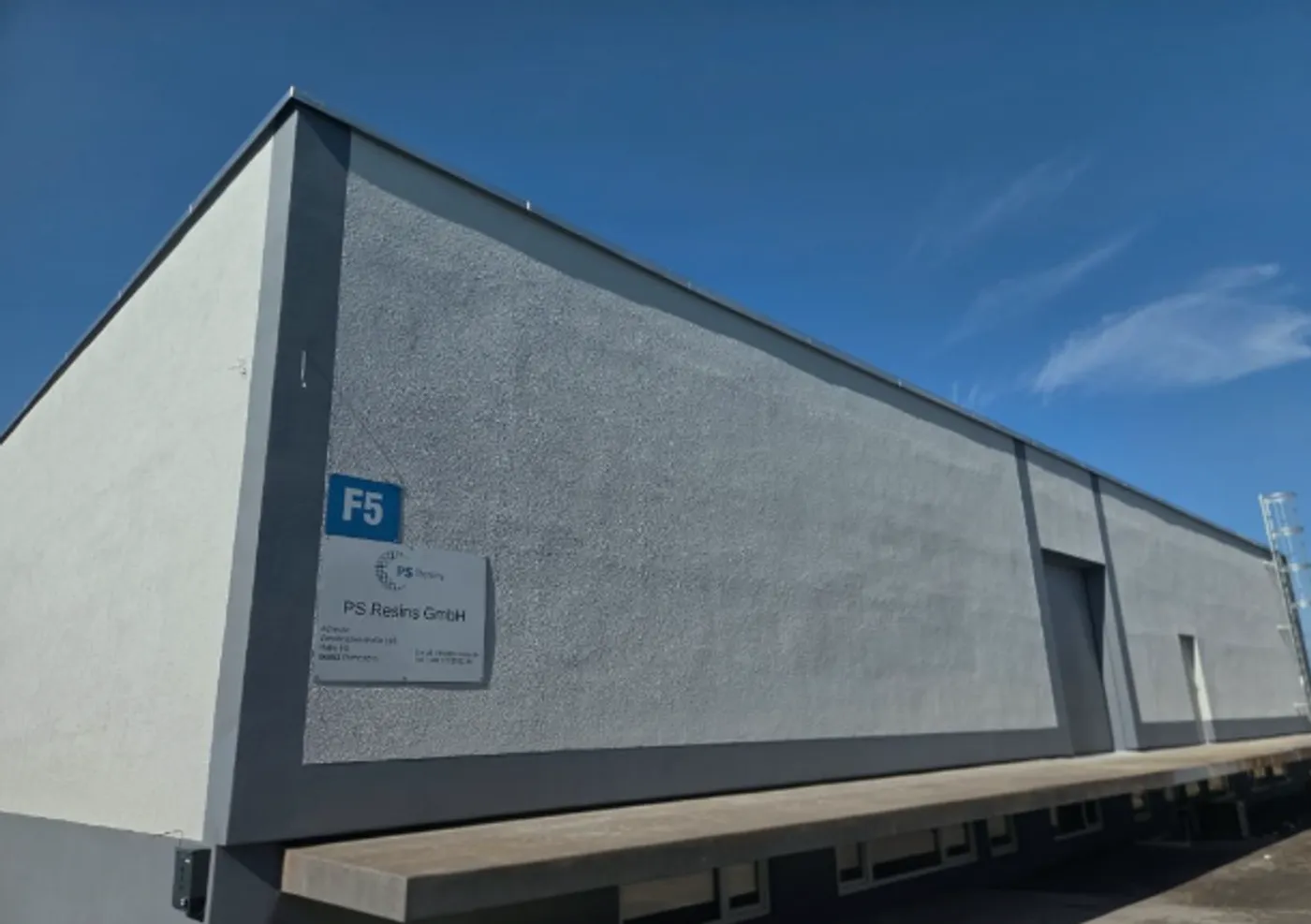
Formulation, analysis and production at our Pirmasens site. We match viscosity, pot life and curing to your process.
One partner, four commitments.
In-house R&D
Formulation and analysis at our Pirmasens site.
In-house production
Manufacturing on our own equipment in Pirmasens.
Tested to standards
Technical data to DIN EN ISO and from accredited testing. Each product page states the scope of testing.
Tailor-made resin systems
Formulations matched to your process and your equipment.
Quick answers.
Do you only develop resins for sewer rehabilitation?
No. Sewer rehabilitation is our established field of application, but we also offer or develop materials for additive manufacturing (3D printing) and, on request, develop reactive resins for electronics, composites, adhesives and coatings.
Which resins are suitable for house connections?
Tazacryl 50, 70 and 100 were developed specifically for house connections. The resins meet the requirements of the DIBt (German Institute for Building Technology) for approval in sewer rehabilitation, and you can obtain approval with your own material. We assess together with you whether a resin suits your application.
Can existing resins be used in other fields?
We define the requirements with you, then check whether an existing resin fits or a new system has to be developed.
Do you develop custom resin systems?
Yes, we want the best possible solution for each customer. Together with you, we analyse your application and arrive at a suitable material solution.
Do you offer materials for additive manufacturing (3D printing)?
Yes. Light-curing resins are used in additive manufacturing (3D printing). We offer materials for it or develop them together with you. Tell us about your process and your requirements, and we will find the right solution.
Show more questionsShow fewer questions
What information do you need for an enquiry?
Application, process, temperature, desired reaction time, properties and quantity required. The more precise this information, the faster we can define the requirements.
How do Tazasil S, W and CW differ?
Tazasil is a two-component silicate resin system that can be processed with different processing parameters (processing temperature, gel time and curing time: Tazasil S 20–35 °C, 35 min, 120 min; W 10–25 °C, 15 min, 90 min; CW 0–15 °C, 7 min, 45 min). Gel time and curing time apply at 21 °C.
Are gel time and pot life the same?
No. For Tazasil we state the gel time, which is measured at 21 °C.
Which curing methods do the product families offer?
Tazacryl resins cure with light (UV or LED) at 365 nm and 380–420 nm, in layers up to 40 mm thick. Tazasil cures cold, at ambient temperature. With Tazipox the curing method depends on the resin: EP30 is cold-curing, EP60 cold- or heat-curing, EP120 and EP240 heat-curing.
Why do you avoid CMR substances of category 1A and 1B?
Such substances mean extra work for processors: special protective measures and a register of the employees concerned. We therefore avoid them from the start of development. For our resins, these duties do not apply, which saves you effort and gives you legal certainty on this point. The general duties for handling hazardous substances are not affected.
Do you support research projects, scale-up and transfer into production?
Yes. We develop new formulations, scale up processes and transfer the results into production. As a development partner, we support research and industry projects from TRL 3 to TRL 9.